Sports
Sports Physical Therapy
in Hinsdale, IL
Recovery that respects your sport. Whether you're a high school athlete, a weekend runner, or a competitive masters lifter, we get you back to doing what you love — stronger than before.
Often paired with related care
What we treat
Conditions
seen in this specialty.
We accept these as primary diagnoses. If you're not sure where your case fits, a 60-minute evaluation maps it correctly on day one.
ACL & meniscus injuries
Pre-op prep, post-op rehab, and full return-to-sport progression — including the strength and confidence work most plans skip.
Rotator cuff strains & tears
Shoulder injuries from overhead sports, lifting, or sudden trauma. Conservative care works for most rotator cuff issues — surgery isn't the default.
Tennis & golfer's elbow
Lateral and medial epicondylitis. Chronic elbow pain that doesn't resolve with rest because the underlying tendon needs targeted loading, not avoidance.
Runner's knee & IT band syndrome
Pain on the outside or front of the knee that flares with mileage. Usually a hip or foot mechanics issue masquerading as a knee problem.
Plantar fasciitis & Achilles tendinopathy
Heel and lower leg pain that limits training. Shockwave therapy combined with progressive loading is the current evidence-based standard.
Hamstring & hip flexor strains
Common in sprinters, cyclists, and field-sport athletes. Returning too early is the #1 cause of re-injury — we use objective return-to-sport criteria, not just "how it feels."
Sport-related concussions
Post-concussion rehab including vestibular, oculomotor, and graded return-to-play protocols coordinated with your physician.
When to see a PT
Signals that
warrant an evaluation.
If you notice any of these patterns — even occasionally — it's worth a sixty-minute assessment to map what's actually going on.
Pain during your sport
Sharp or recurring discomfort that shows up during a specific movement — serving, sprinting, jumping, throwing.
Joint instability
"Giving way," catching, or a feeling that the joint isn't trustworthy under load.
Loss of range of motion
Can't reach overhead, can't squat to depth, can't rotate without restriction.
Performance plateau
Strength or speed stuck despite training — often a sign of underlying mechanics that need addressing.
Recurring injury
The same pull, strain, or flare-up every season. The pattern is fixable.
How we treat it
The clinical playbook
for this specialty.
01—Modality
Phase 1 — Acute care
Pain control, swelling management, protecting the injured tissue. Manual therapy, modalities like cold laser when indicated, and load management.
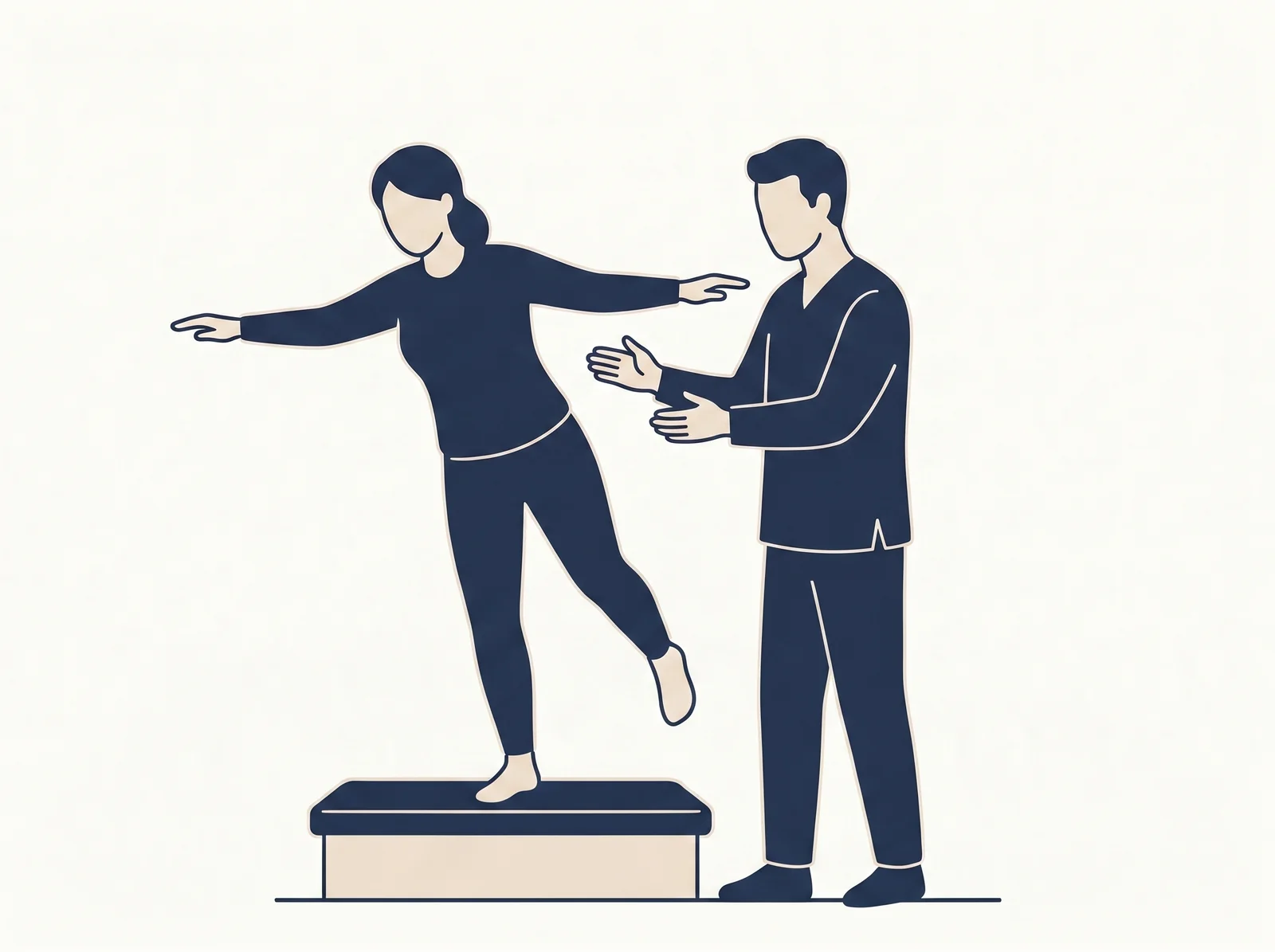
02—Modality
Phase 2 — Restore range of motion
Mobility work, soft tissue release, and joint mobilization to get the affected area moving again without pain.
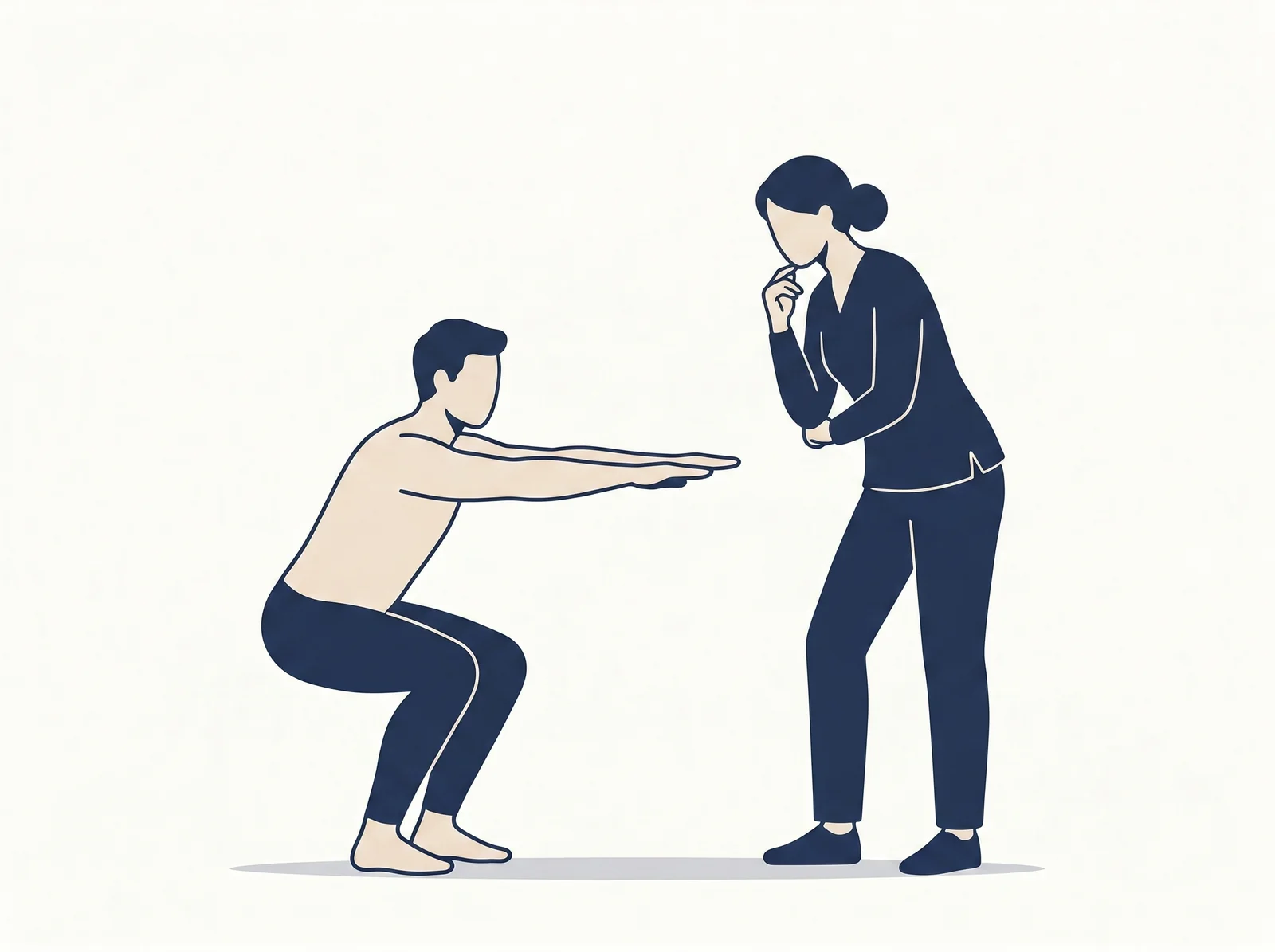
03—Modality
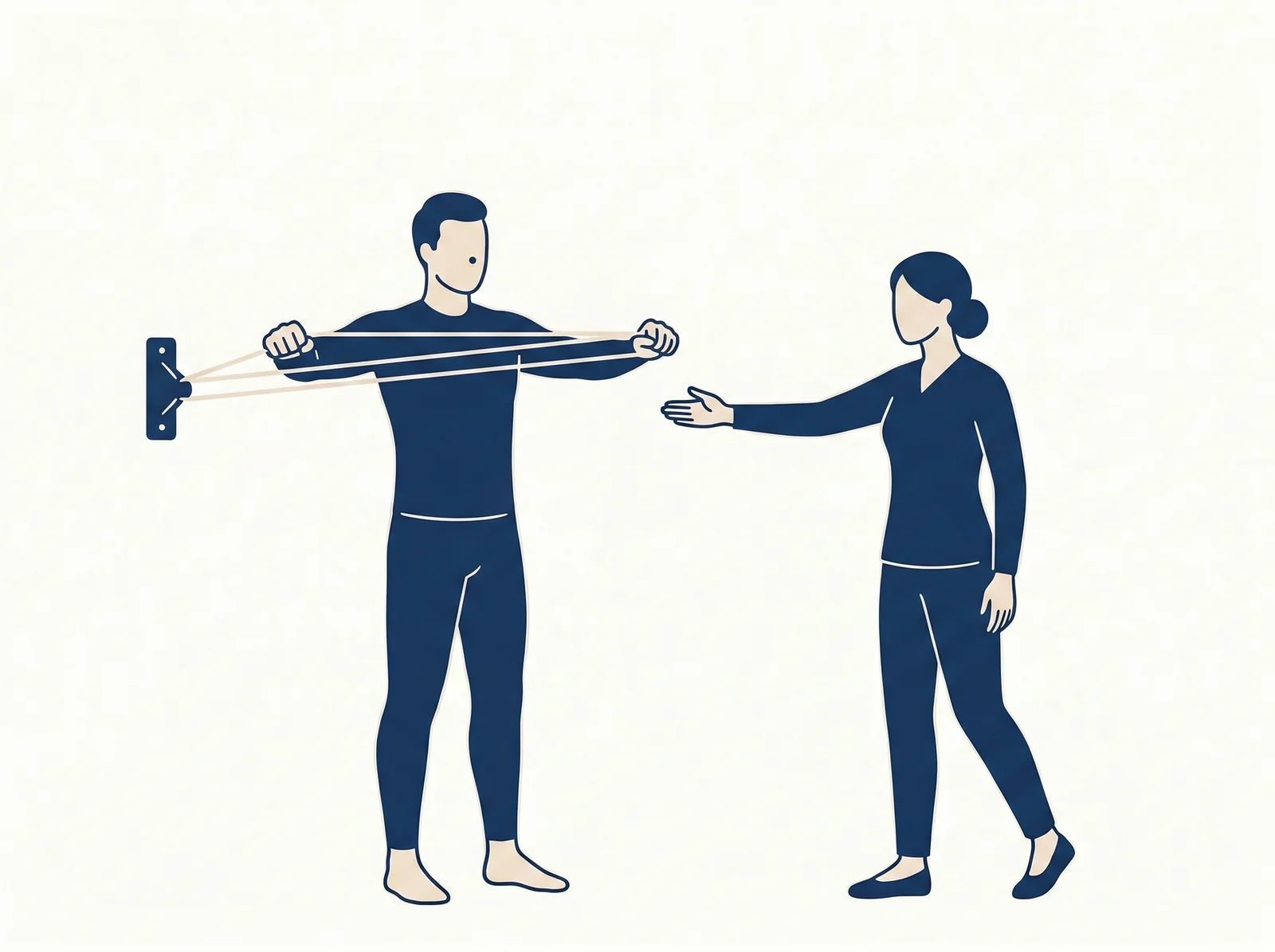
Phase 3 — Strength & sport-specific loading
Progressive strengthening that mirrors the demands of your sport. Not generic exercises — specific patterns that prepare you for what you'll actually do.
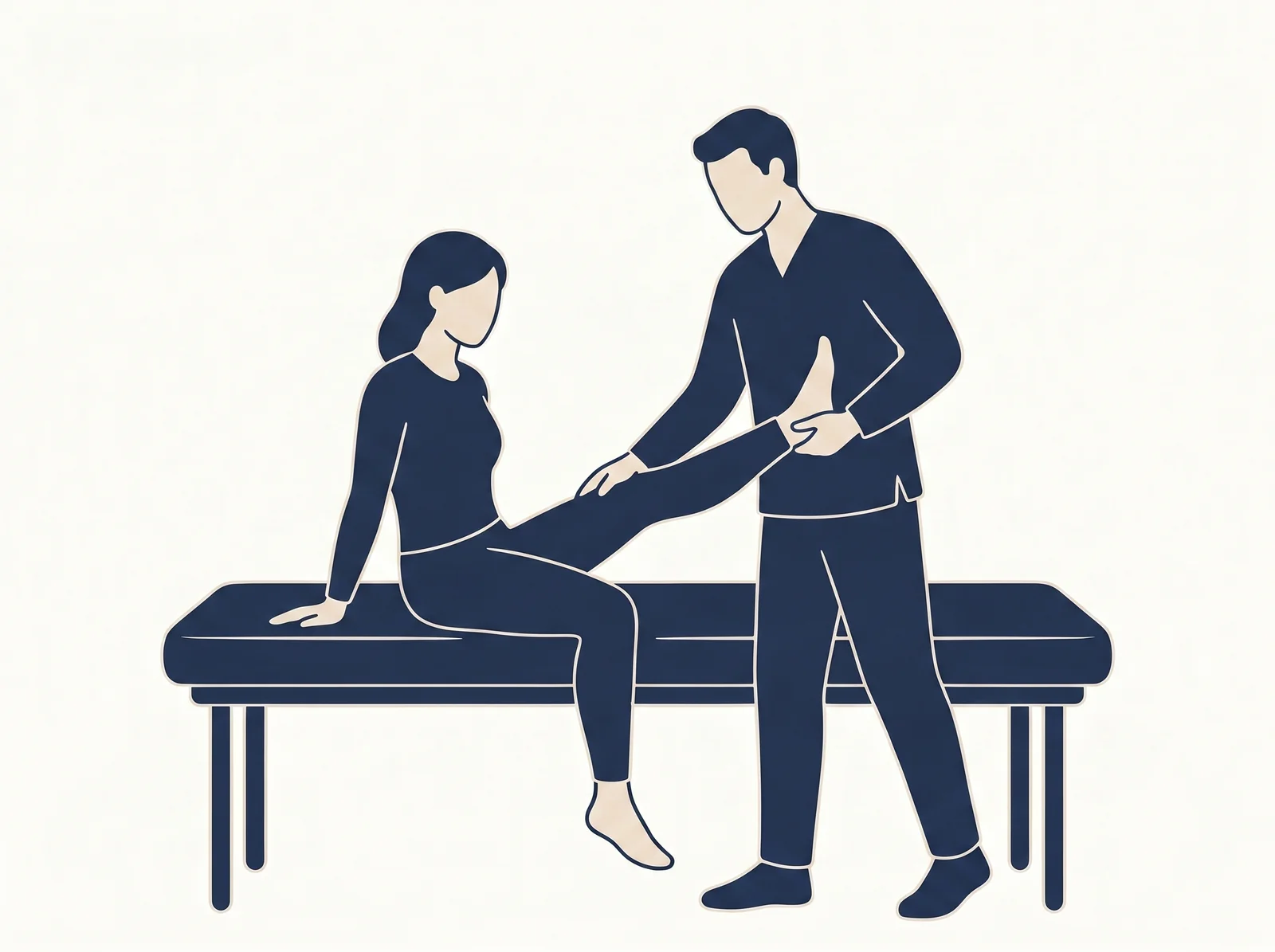
04—Modality
Phase 4 — Return-to-sport testing
Objective criteria — strength ratios, hop tests, sport-specific movement assessments — to confirm you're ready. Most re-injuries happen because someone returned on feel alone.
05—Modality
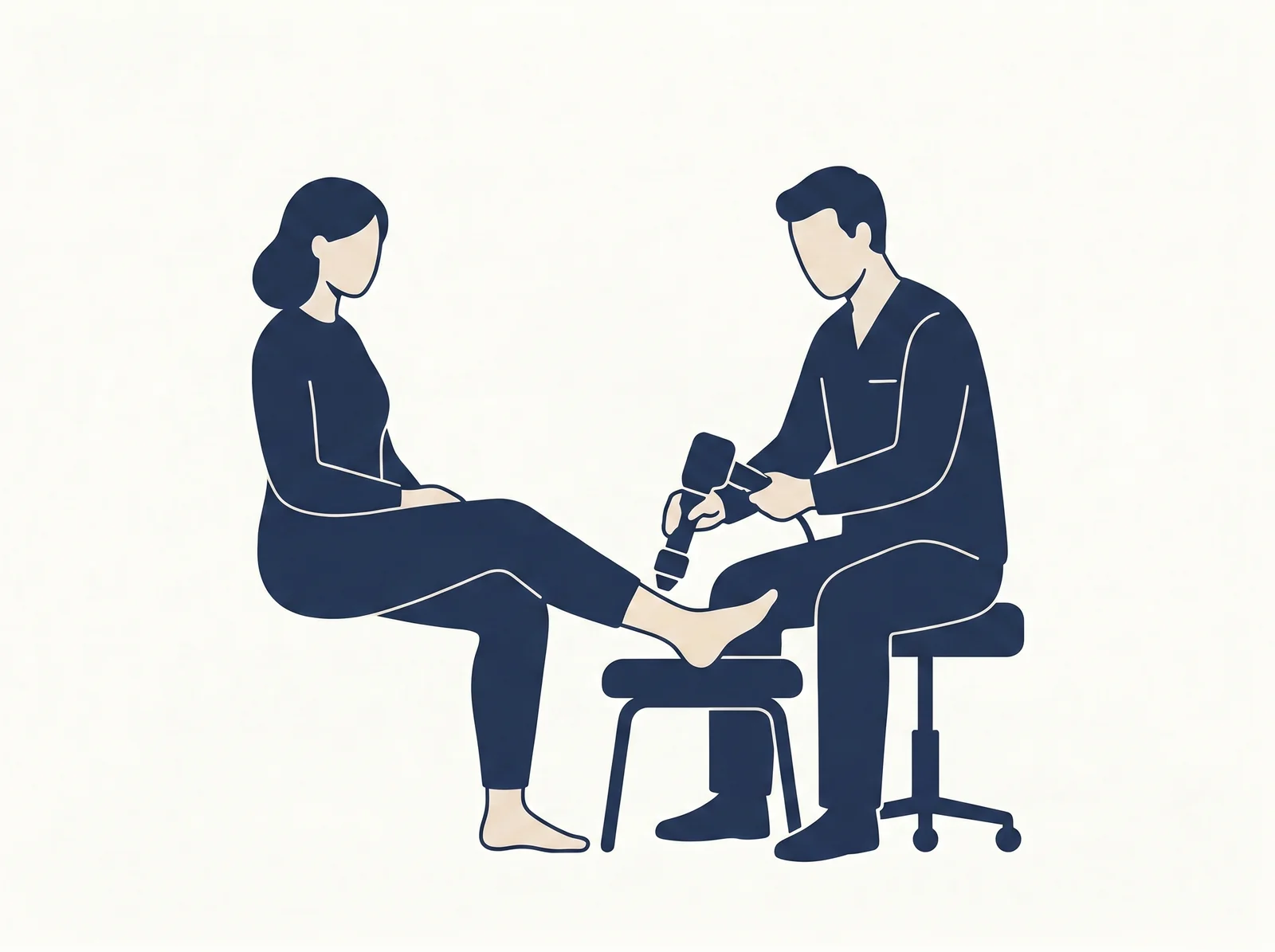
Shockwave & cold laser when indicated
For chronic tendon issues (plantar fasciitis, jumper's knee, tennis elbow), shockwave therapy accelerates healing the way rest alone won't.
06—Modality
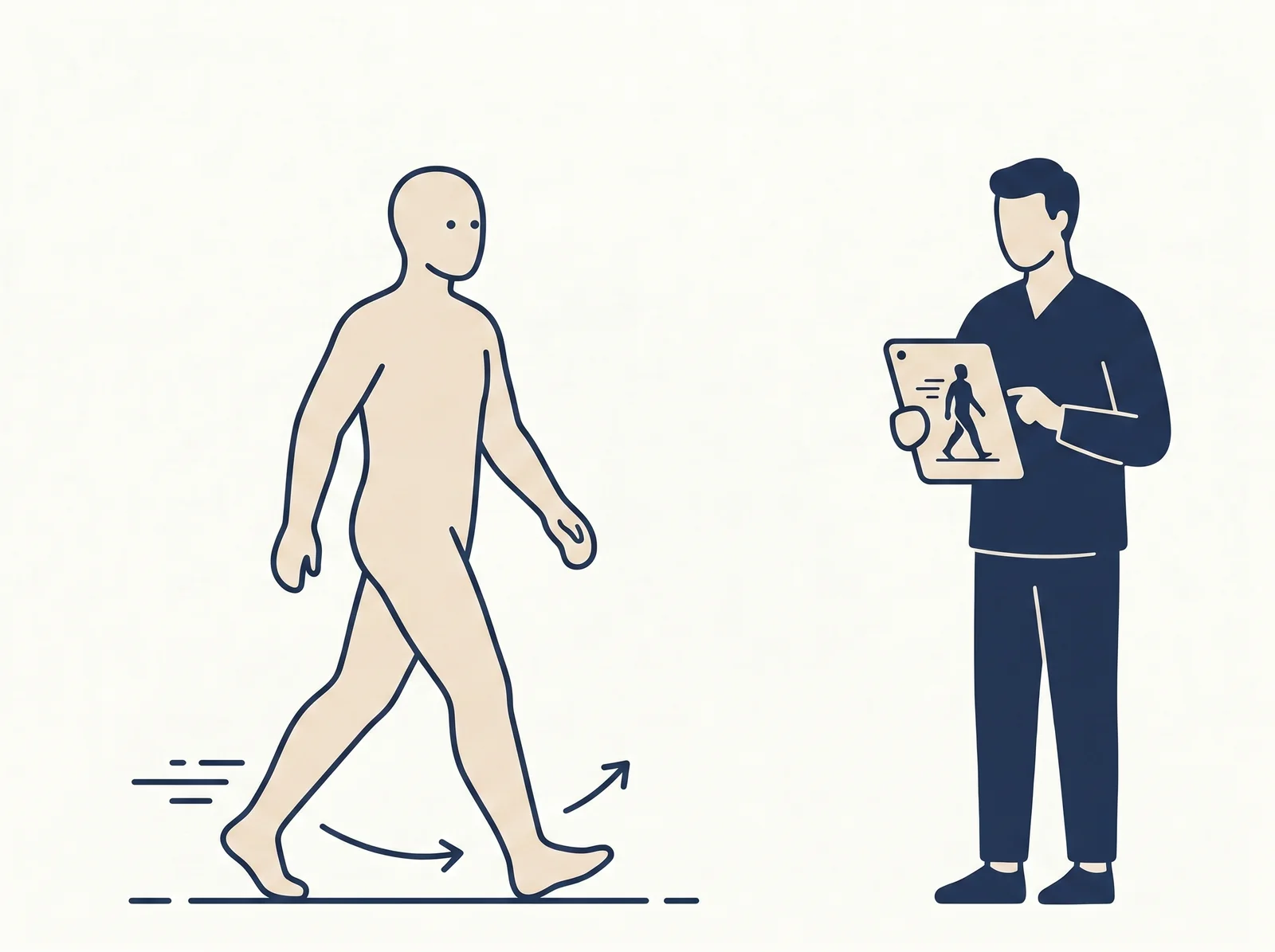
Gait & movement analysis
For runners and field athletes, video gait analysis catches the small mechanical issues that produce big injuries over time.
What to expect
The phased timeline
most patients follow.
Honest milestones. Cases vary, but most look something like this. We re-test at every phase so progress is measured, not assumed.
- 01Visit 1
Full evaluation
Injury history, movement assessment, sport-specific testing. You leave with a clear timeline and a plan written around your season — not against it.
- 02Weeks 1–3
Recovery phase
Pain reduction, restoring mobility, beginning controlled loading. You'll often start light sport-specific work in this phase.
- 03Weeks 3–8
Progressive loading
Strength, power, and sport-specific demands rebuilt systematically. Most athletes return to modified training in this phase.
- 04Return to sport
Objective clearance
We test before we clear. Full return only when the data — not just the feel — says you're ready.
Why Progressive PT
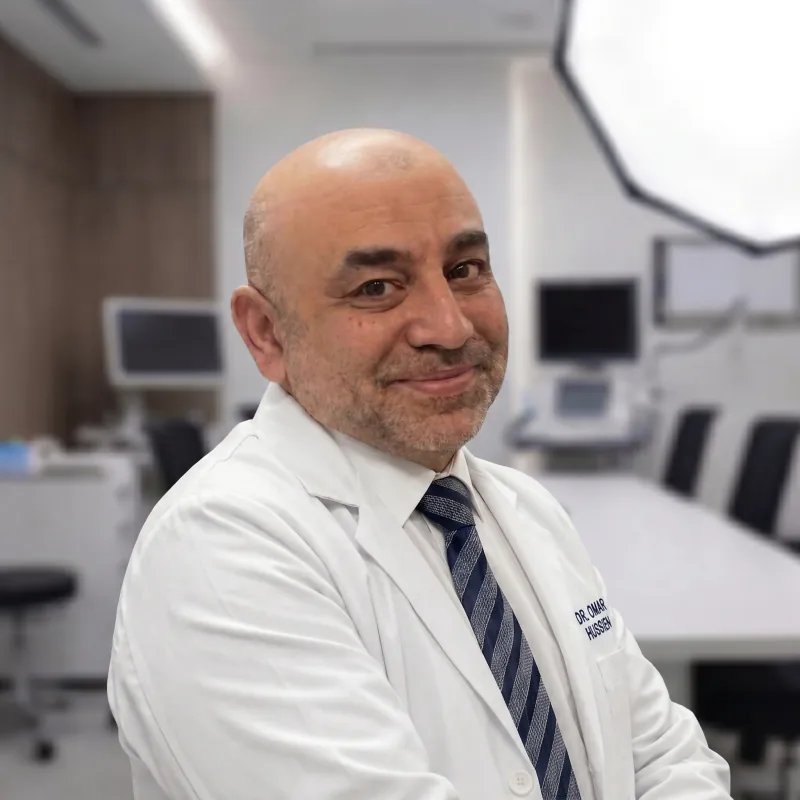
Why Dr. Omar Hussien
leads this specialty.
Dr. Omar Hussien has worked with athletes ranging from high school football players to competitive endurance athletes. Every plan is built around your specific sport, your specific goals, and the season you're trying to get back to.
Related services
What patients with this diagnosis
often add to their plan.
Shockwave
Extracorporeal shockwave therapy for chronic tendon and soft tissue conditions that haven't responded to rest and standard care. FDA-cleared, non-invasive, strong evidence for plantar fasciitis and tendinopathies.
Cold Laser
Low-level laser therapy for pain, inflammation, and tissue healing. Drug-free, non-invasive, FDA-cleared. Used alongside hands-on PT when the evidence supports it.
Gait Analysis
Comprehensive walking and running analysis to identify the mechanics driving pain, injury, or instability — and the targeted training to fix them. For seniors, athletes, and everyone in between.
Common questions
About sports pt
therapy.
It depends on the injury and how it's healed. For most overuse injuries (runner's knee, plantar fasciitis), we use a structured return-to-run progression starting with walk-run intervals. For acute injuries (sprains, strains), it's usually 4–12 weeks. We'll give you a realistic timeline at your first visit and revise it based on how you respond.
Full return to sport after ACL reconstruction typically takes 9–12 months — not the 6 months some surgeons quote. The science is clear that returning before 9 months significantly raises re-injury risk. We work through the full progression, from immediate post-op rehab to return-to-sport testing.
Yes. We work with athletes from middle school through college and beyond. Youth athletes need different programming — growth plates, sport specialization issues, and the long-term goal of staying in the sport into adulthood. We treat the athlete, not just the injury.
Usually, yes — with modifications. Complete rest is rarely the right answer. We'll tell you exactly what you can do, what to avoid, and how to modify your training so you keep some fitness while you heal.
Not in Illinois. You can schedule an evaluation directly. If you're post-surgical, we'll request your operative report from your surgeon's office and coordinate care so we're following the correct protocol.
Get started
Book your
sports pt evaluation.
Same-week availability for most new patients. We verify your benefits before your first visit.